Greetings from Chico … however, sorry, no update today
Posted by: Aqua Blog Maven on July 31, 2010 at 9:22 am
I’m in Chico today, headed out to Lake Oroville, which, by the way, is not full. How not full? I’ll take a picture and show you tomorrow.
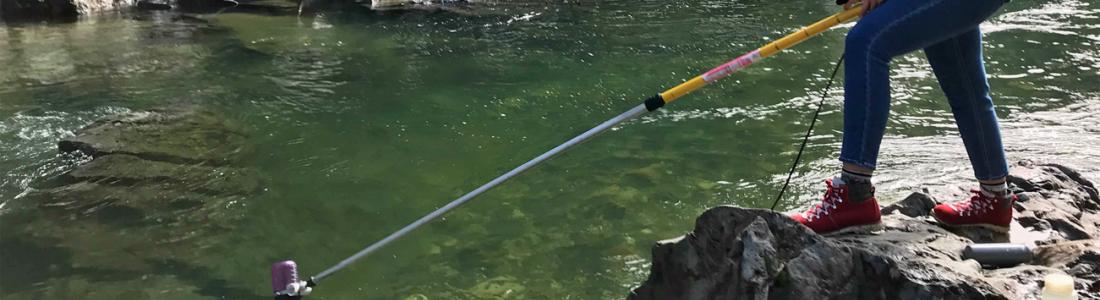
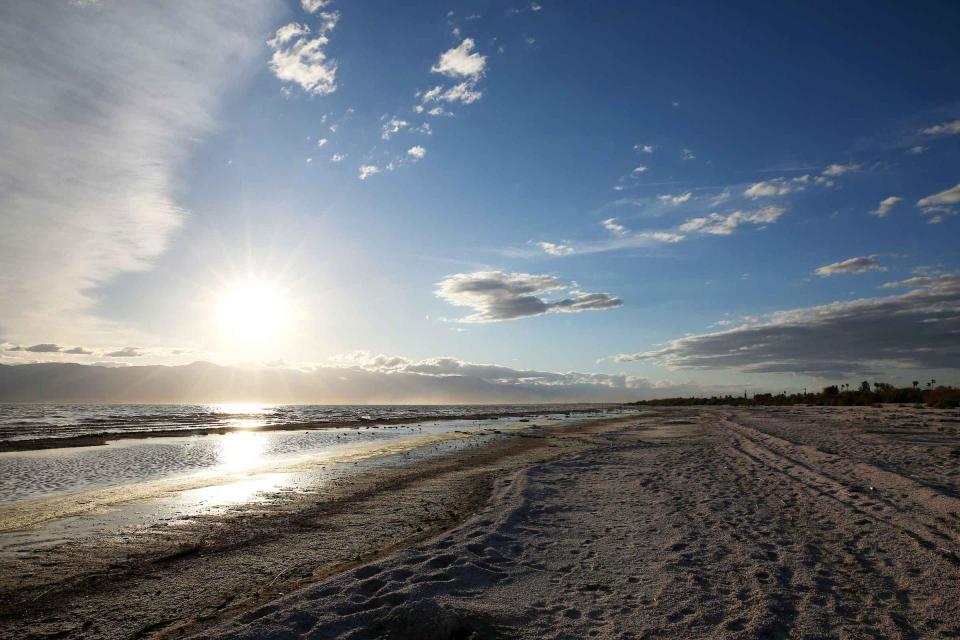
This picture is from the north fork of the Feather River. State Water Project users, here is where some of the water you drink originates from! We traveled the Feather River Highway (Route 70) yesterday. It’s a beautiful trip – I highly recommend it if you are up this way. (Just don’t try to do it too fast; it’s a windy two-lane road and you’ll probably want to stop often.)
I have more pictures to show you, and hopefully I’ll have time tomorrow morning to post them!
No update this morning, sorry … but I’ll have the site fully updated for you tomorrow morning!
Enjoy your Saturday.
Regards,
Aqua Blog Maven
Friday’s top of the scroll: California Aqueduct/Delta-Mendota intertie project gets $14.6 Million
Posted by: Aqua Blog Maven on July 30, 2010 at 7:33 amFrom the Central Valley Business Times:
“A $14.6 million contract, with the money coming from the federal stimulus act, has been awarded to Shimmick Construction of Oakland to build a pumping plant and pipeline to link the Delta-Mendota Canal and the California Aqueduct.
The project is about five miles west of Tracy and when completed is expected to allow greater utilization of the capacity at the state and federal Jones Pumping Plant. The “Intertie” will also allow for maintenance and repair activities and provide a greater ability to respond to emergencies, the government says. … “
Continue reading from the Central Valley Business Times by clicking here.
Secretary Salazar announces $14.6 million of economic recovery funding for Delta-Mendota Canal/California Aqueduct Intertie Pumping Plant, underground pipeline
Posted by: Aqua Blog Maven on July 30, 2010 at 7:31 amFrom the Bureau of Reclamation, this press release:
“Secretary of the Interior Ken Salazar announced today that the Bureau of Reclamation’s Mid-Pacific Region has awarded a $14.6 million contract under the American Recovery and Reinvestment Act of 2009 (ARRA) for construction of the Delta-Mendota Canal/California Aqueduct Intertie Pumping Plant and Pipeline (Intertie).
“These stimulus funds will not only help the economy and provide jobs, but also will contribute to the actions being taken to help alleviate California’s water crisis,” said Secretary Salazar. “The Intertie adds flexibility through the use of existing facilities while increasing the reliability of water projects in California’s Central Valley.”
With this ARRA award, Reclamation is initiating the construction phase of the project. The $14.6 million award was issued to Shimmick Construction of Oakland, Calif. for building a pumping station and underground pipeline connection, installing four pumps and motors and building an electrical switchyard. Construction is expected to begin in fall 2010 and be completed by early 2012.
When completed, the Intertie will connect the Delta-Mendota Canal (DMC) and the California Aqueduct to relieve DMC conveyance limitations, allow for maintenance and repair activities, and provide the flexibility to respond to Central Valley Project and State Water Project emergency water operations. The project was identified as a proposed action in the August 2000 CALFED Bay-Delta Program Programmatic Record of Decision. The new facility will be located between the DMC and California Aqueduct approximately five miles west of the City of Tracy, California.
The American Recovery and Reinvestment Act enacted in 2009 gave $3 billion to the Department of the Interior.
The ARRA funds represent an important component of the President’s plan to jumpstart the economy and put a down payment on addressing long-neglected challenges so the country can thrive in the 21st century. Under the ARRA, Interior is making an investment in conserving America’s timeless treasures – our stunning natural landscapes, our monuments to liberty, the icons of our culture and heritage – while helping American families and their communities prosper again. Interior is also focusing on renewable energy projects, the needs of American Indians, employing youth and promoting community service.“With its investments of Recovery Act funds, the Department of the Interior and its bureaus are putting people to work today to make improvements that will benefit the environment and the region for many years to come,” Secretary Salazar said.
Secretary Salazar has pledged unprecedented levels of transparency and accountability in the implementation of the Department’s economic recovery projects. The public will be able to follow the progress of each project on www.recovery.gov and on www.interior.gov/recovery. Secretary Salazar has appointed a Senior Advisor for Economic Recovery, Chris Henderson, and an Interior Economic Recovery Task Force to work closely with Interior’s Inspector General and ensure the recovery program is meeting the high standards for accountability, responsibility, and transparency set by President Obama.
Reclamation is the largest wholesale water supplier and the second largest producer of hydroelectric power in the United States, with operations and facilities in the 17 Western States. Its facilities also provide substantial flood control, recreation, and fish and wildlife benefits. Visit Reclamation’s website at www.usbr.gov.”
Water supply a top environmental issue in new PPIC survey
Posted by: Aqua Blog Maven on July 30, 2010 at 7:27 amFrom ACWA’s Water News:
“Californians identify water supply as one of the most important environment issues facing the state, second only to air pollution, according to the latest statewide survey by the Public Policy Institute of California. … “
More from ACWA’s Water News (plus link to PPIC survey) by clicking here.
Commentary: Increased water storage is key to California’s economy
Posted by: Aqua Blog Maven on July 30, 2010 at 7:24 amFrom the Silicon Valley Mercury News, this commentary by Charlie Barra:
“If California does not provide an adequate water supply at reasonable cost to its agricultural industry, competition from globalization will soon turn the state into a Third World country.
Most of the people working to find a solution to California water problems seem to have a hard time understanding the economic impact that the lack of water at reasonable prices has on the economy and how this directly affects working families and the state’s tax base.
Additionally, this great state has been able to export food products, within the United States and internationally, at reasonable prices. That, in effect, has raised the standard of living for all those consumers. We must have a reliable source of water to be able to continue growing these much-needed commodities at fair prices.
When agricultural land is abandoned or fruit trees and grape vines are taken out because of the lack of water, the assessed value of the property goes down. This results in decreased revenues for local services, thereby resulting in the loss of jobs for working families. Additionally, there is a measurable decrease in the income from production, which reduces income taxes by billions of dollars to the state and federal governments.
We must change the direction in which we have been going and make an investment to come up with new, innovative ways to support the agricultural endeavors that we’ve already developed to help move our economy forward. … “
Continue reading this commentary by clicking here.
Barry Nelson: The State Legislature and water agencies anticipated the State Water Board’s conclusions
Posted by: Aqua Blog Maven on July 30, 2010 at 7:22 amFrom Barry Nelson at the NRDC Switchboard blog:
“Last week, the State Water Board released a draft report presenting their scientific conclusions regarding the amount of water required to restore a healthy San Francisco Bay-Delta ecosystem. The draft report, discussed here, clearly reveals that we have, in recent years, diverted more water from this ecosystem than is environmentally sustainable. That conclusion is not news to California’s salmon fishermen or the scientific community. But many others have quietly seen this conclusion coming as well.
Some in the media weren’t surprised by the draft report, as this editorial reveals in the Silicon Valley Mercury News.
The board’s draft report is also hardly a surprise to the State legislature, which ordered the Board to complete this analysis in the water reform package passed at the end of 2009. … “
Continue reading Barry Nelson’s post at the NRDC Switchboard blog by clicking here.
On the Water Front blog: State Water Board determines Delta diversions unsustainable
Posted by: Aqua Blog Maven on July 30, 2010 at 7:19 amFrom Cynthia Koehler at the Environmental Defense Fund’s On the Water Front blog:
“A water weary reporter recently asked me why people should pay attention to the State Water Resources Control Board’s public trust flow recommendations, due to be finalized next week. “I mean, isn’t this just another report to sit on another shelf?” It’s a fair question, but adding more paper to more shelves was certainly not the intent of the lawmakers who fought hard to keep this key aspect of last fall’s Delta legislation intact.
Others are seeing value in the Board’s work as well. As the San Francisco Chronicle put it last week, the Delta “is not a bottomless well.” The Chronicle went on to say that the Water Board’s draft public trust flow analysis is a “bell-ringing reminder of the obvious,” that our 70-year trend of increasing diversions from the Delta is not sustainable and that “California can’t keep tapping the Delta without harming it.” … “
Continue reading from the On the Water Front by clicking here.
On the Public Record blog: Less hookers and blow than you would think. Tragic, really.
Posted by: Aqua Blog Maven on July 30, 2010 at 7:09 amFrom the On the Public Record blog:
“I love the North County Times water reporting. Couldn’t tell you whether the rest of the paper is any good, but I find their water reporting to be informative and thorough, with a good eye for detail. This op-ed in the North County Times, however, lacks their usual nuance. It is written by a Ms. Batra, who imagines her local water authorities to be an authoritarian bunch. I am at a loss, however, to understand exactly how their fiendish plots will work.
On the surface, Ms. Batra objects to a recent reversal of district rate policy. She writes that the people of Encinitas were promised a lower water rate if they conserved; on getting good conservation returns, four of five (city?) councilmembers canceled the lower rates. (I don’t know if this is the actual story, if there were a promise to reduce rates, what the vote was, what actually happened.) I strongly suspect the city had the same problem many districts had in the past drought. They had a poorly designed rate structure, one that spread the costs of their capital and operating costs over the amount of water they sold. When they sold less water, they suddenly found they couldn’t pay their fixed costs. … “
Continue reading from the On the Public Record blog by clicking here.
On the Public Record blog: Jerry Brown is still not talking about water
Posted by: Aqua Blog Maven on July 30, 2010 at 7:07 amFrom the On the Public Record blog:
“Candidate for governor Jerry Brown released two more campaign plans, on education and the environment. He is still not talking about water. Can’t blame him. The field is turbulent and polarized right now; declaring himself on anything related to the Delta (and everything is related to the Delta) can only make people mad. Personally, I would love for him to come out with some strong statement. Folks in the agencies are reading tea leaves and entrails, wondering whether our on-going projects will be up-ended in January.
Bureaucrat that I am, I loved one thing in particular about his plan for the environment. Under Protect California’s Coastline and Ocean Resources (Item 3, page 5), he wrote:
…Complete and implement California’s Climate Adaptation Plan aimed at protecting against sea level rise, salt water intrusion, and increased erosion.
I am nearly overcome. He is aware of an existing planning document! He wants to implement it! He will draw on already existing work, rather than have his administration start from scratch! … ”
Continue reading from the On the Public Record blog by clicking here.
Aguanomics blog: Big ag sells to big urban
Posted by: Aqua Blog Maven on July 30, 2010 at 7:04 amFrom the Aguanomics blog:
“I’ve been participating in an email discussion about Westland’s plan to sell 50-100,000 acre feet of water to Metropolitan Water District (Spreck broke the news; this article gives more background).
This ag-to-urban, central-to-southern California sale upsets enviros.Why?
1. WWD has been making A HUGE FUSS about how it needs MORE water. How is it possible now that they can be selling water? (Short answer is that WWD has to sell it, to avoid losing it from storage; the long answer is that WWD will eventually sell ALL of its water to SoCal urban buyers. No, it’s NOT about the workers, food or community. It’s about MONEY.)
2. MWD’s water has driven SoCal sprawl, and more water means more lawns at MWD and more sprawl into new housing developments.I am not so upset about these “business facts.” I have no problem of water going from willing sellers to willing buyers, for beneficial use. … “
However, the Aguanomics blog has some problems with the transfer. Find out what they are by clicking here.
Boutris Wittfogel – Sloppy science at the water board
Posted by: Aqua Blog Maven on July 30, 2010 at 7:00 amFrom the Chronicles of the Hydraulic Brotherhood blog:
“I’m wondering what happened to pride in workmanship in the water world. Why is there so much sloppy work? I understand there are numerous beneficiaries of deficient work, but why are the standards so low amongst the professionals and their managers who produce and review this junk? Why are the professionals not more demanding of themselves? Why do we continue to see crap like this? or this? Why is it that any fat document with a pretty cover page and an impressive table of contents passes for excellence? … “
Continue reading from the Chronicles of the Hydraulic Brotherhood blog by clicking here.
Green Roots blog: How climate change impacts water supply
Posted by: Aqua Blog Maven on July 30, 2010 at 6:57 amFrom the Planning & Conservation League’s Green Roots blog:
“A new report by the consulting firm Tetra Tech reveals the impact climate change will have on water supply reliability in the United States and clearly demonstrates that urgent action is needed to move California toward more sustainable water supplies.
As part of its analysis, Tetra Tech used an index to assess risks to water supply reliability on a county-by-county basis. Fully one-third of all counties in the lower 48 states will face high risks of water shortage by 2050, and nearly half of those will face extremely high risks of water shortage. Water use in some of these high-risk areas like the Great Plains and the Southwest is already unsustainable. As climate change affects temperature and precipitation levels, the number of counties facing high water shortage risks will increase, and areas like the Great Plains and the Southwest may not have any available precipitation at all. … “
Continue reading from the Green Roots blog by clicking here.
Agencies react to Delta flow criteria report
Posted by: Aqua Blog Maven on July 30, 2010 at 6:52 amThanks to agleader’s twitter feed, here are comment letters regarding the Delta flow criteria:
Northern California Water Association
State and Federal Contractors Water Agency
Santa Clara Valley Water District
Hydropower hearing, Natural Resources Water and Power Subcommittee, opening statement by Representative Tom McClintock
Posted by: Aqua Blog Maven on July 30, 2010 at 6:37 amFrom Hydro World:
“Rep. Tom Mclintock, R-Calif. (4th CD), issued the following news release:
Representative Tom McClintock (CA – 04), Ranking Member of the House Water and Power Subcommittee, today made the following opening statement at a hearing about low-impact hydropower:
“I applaud this hearing on expanding small hydropower development to augment our hydroelectric capacity. We will hear testimony today on the bureaucratic obstacles that federal agencies have placed in the way of the placement and construction of these hydro-electric generators, and I believe that Congress must make a concerted effort to identify and remove these obstacles that discourage development and drive up the price of electricity for consumers.
“I am concerned, however, with an attempt to use the promise of small hydroelectricity projects as an excuse to delay, impede — and among certain extremist groups, to destroy — existing large-scale hydroelectric facilities.
“One of the lamentable tendencies I have noticed in this Congress is to heavily subsidize those forms of water and power generation that are ideologically pleasing to the environmental Left while obstructing or even dismantling water and power generation frowned upon by the same extremist groups. … “
Continue reading from Hydro World by clicking here.
Siskiyou County responds to groundwater lawsuit
Posted by: Aqua Blog Maven on July 30, 2010 at 6:34 amFrom the Siskiyou Daily News:
“Siskiyou County has developed its statement in response to a challenge of its groundwater regulatory practices after an extended closed session Tuesday in which the Siskiyou County Board of Supervisors scheduled numerous discussions of current and anticipated litigation.
The statement comes after a June 23 petition from the Environmental Law Foundation (ELF) and Pacific Coast Federation of Fishermen’s Associations (PCFFA) requesting that the Superior Court of the State of California order the State Water Resources Control Board (WCB) and Siskiyou County to cease the “issuance or renewal of groundwater extraction permits or well drilling permits within the Scott River sub-basin until such time as they are not in violation of their public trust duties.” … “
Continue reading from the Siskiyou Daily News by clicking here.
American Canyon searches for water solutions
Posted by: Aqua Blog Maven on July 30, 2010 at 6:30 amFrom the Napa Valley Register:
“How much city water should be sold to agricultural, commercial and industrial users? And who should be shifted to alternative sources, including reliable, but more expensive, Vallejo water? These are among the policy questions members of American Canyon’s blue ribbon water committee are set to tackle over the next couple of weeks.
On Tuesday, the committee, a group that includes city officials, business representatives and residents, met to address policy matters on water.
The city relies primarily on water transported to its Jamieson Canyon water treatment plant from the Sacramento Delta via the North Bay Aqueduct, part of the State Water Project. … “
Continue reading from the Napa Valley Register by clicking here.
Bay Area: Water quality closures up at some area beaches
Posted by: Aqua Blog Maven on July 30, 2010 at 6:22 amFrom the San Francisco Chronicle:
“Last year wasn’t a good time to be a beach bum in Northern California, thanks to oily, polluted water that caused an unusual number of closures and health warnings, particularly in the San Francisco area, according to a Natural Resources Defense Council report released Wednesday.
The 20th annual beach water report, Testing the Waters: A Guide to Water Quality at Vacation Beaches, examined state and local data from 200 of the most popular U.S. beaches. Seven percent of the water samples of beaches nationwide and 9 percent of the samples in California violated state health standards in 2009.
The Bay Area suffered a particularly large increase in beach closures, largely as a result of the Dubai Star spill Oct. 30 in which up to 800 gallons of oil spewed into San Francisco Bay. … “
Continue reading from the San Francisco Chronicle by clicking here.
Modesto Irrigation District, Turlock Irrigation District explore Don Pedro dam project
Posted by: Aqua Blog Maven on July 30, 2010 at 6:20 amFrom the Union Democrat:
“The Turlock and Modesto irrigation districts are exploring a proposed $1.7 billion pumped storage dam project near Lake Don Pedro.
The goal of the project, dubbed Red Mountain Bar, is to pump water from Don Pedro uphill to a storage reservoir, only to release it through a hydroelectric generator during peak energy-demand times, such as summer afternoons.
The released water would be returned to Don Pedro. The reservoir would be created by a dam built about a mile east of the lake. The release of the water back into Don Pedro would generate energy to help power TID and MID’s power grid.
TID Project Manager Jeff Barton said the electrical output would range from 880 to 1,000 megawatts, enough to power as many as 500,000 homes. Energy not used by TID and MID could be sold to other power agencies. … “
Continue reading from the Union Democrat by clicking here.
San Benito County: Crop values shrink again with scarcity of water
Posted by: Aqua Blog Maven on July 30, 2010 at 6:18 amFrom the Hollister Free Lance:
“The value of locally-produced crops has fallen almost $50 million over the past two years, including a nearly $19 million drop in 2009, the second consecutive down year for agriculture following six years of growth.
Despite the drop in value, as reported in the annual crop report presented to the county Board of Supervisors this week, Agriculture Commissioner Ron Ross said the diversity of local crops should allow the industry to rebound.
“Agriculture is dynamic,” he said. “The agriculture here is well-diversified. If something goes up in production, some other commodity typically goes down.” … “
Continue reading from the Hollister Free Lance by clicking here.
Lois Henry: Attempt to delay Kern River process denied
Posted by: Aqua Blog Maven on July 30, 2010 at 6:12 amFrom the Bakersfield Californian:
“Thank goodness I’m not the only one who sees through what the so-called North Kern group is up to on the Kern River — delay, delay, delay.
The latest attempt was a motion to stay, or suspend, an historic order by the State Water Resources Control Board in February finding there is water available on the Kern River. The North Kern group promptly appealed the order, was denied by the board and then sued to have the order rescinded. As part of that suit, the group filed the motion to suspend the order while the appeal goes forward.
Superior Court Judge Jose. R. Benavides quickly figured out that the motion was an unnecessary delaying tactic and denied it Thursday morning, saying it wouldn’t be in the public’s interest. … “
Continue reading from the Bakersfield Californian by clicking here.
Santa Clarita: Debate continues over wastewater rate issue
Posted by: Aqua Blog Maven on July 30, 2010 at 6:02 amFrom Santa Clarita’s KHTS:
“Though discussion on proposed wastewater rate increases have been postponed till spring, there is now talk of the plan backfiring, causing ratepayers to eventually spend more than proposed.
Since the plans to hike rates on wastewater were shot down, the Sanitation District is now exploring the option to borrow money from an existing fund of fees from new sewer hookups.
The problem lies in the fact that the money borrowed from the fund must be replaced.
John Gulledge, department head in charge of financial planning for the Sanitation District said, “We are allowed to borrow from the capital improvement fund but it will result in ratepayers repaying that money, plus interest.” … “
Continue reading from KHTS by clicking here.
Commentary: Someone has to pay
Posted by: Aqua Blog Maven on July 30, 2010 at 5:55 amFrom the Santa Clarita Signal, this commentary by Cam Noltemeyer:
“Who is going to pay? Not us.
The question is, who will pay, how will they pay and when will they pay.
Water from Northern California is expensive.
It costs money to pay for the Earl Schmidt Filtration and Rio Vista Water Treatment plants to clean up that water and make it drinkable. Then it costs more money to take the salt out so it will not hurt downstream farming.
Someone has to pay for all of this. There is no free lunch.
Because of all these costs, imported state water is way more expensive then our local well water. But our local water supply can no longer support all the new development in the valley without state water. And all new development that is approved will require more imported state water. … “
Continue reading this commentary by clicking here.
Metropolitan to launch series of public forums on Southland’s water future
Posted by: Aqua Blog Maven on July 30, 2010 at 5:52 amFrom Metropolitan Water District, this press release:
“In the face of unprecedented water challenges, the Metropolitan Water District of Southern California next week will take the next step in overhauling the region’s long-term resources plan that will provide a roadmap for maintaining water supply reliability over the next 25 years.
Beginning next Tuesday (Aug. 3) in Orange, Metropolitan will host the first of four public stakeholder forums as the district conducts outreach efforts to update the district’s Integrated Resources Plan. Through the forums, Metropolitan and its 26 member public agencies are looking to engage and seek input on the draft 2010 IRP from the public, local water agencies, government, business and environmental communities as well as other stakeholders. The district made available the draft plan earlier this month (http://www.mwdh2o.com/irp).
“This input will be essential in determining the right combination of imported deliveries and continued regional and local investments in water conservation, recycling, groundwater cleanup and ocean water desalination to meet future demands. This will lead to fundamental changes in the way our water supply needs and reliability goals are met,” said Debra C. Man, Metropolitan assistant general manager and chief operating officer.
Dennis P. Zine: DWP ratepayer advocate would not solve problems
Posted by: Aqua Blog Maven on July 30, 2010 at 5:50 amFrom the Los Angeles Daily News, this commentary from City Councilman Dennis Zine:
“The Los Angeles Department of Water and Power is the people’s utility. Anyone who pays a DWP bill has a vested ownership interest. Despite this fact, the DWP has become woefully out of touch with the ratepayers it serves.
Most recently, DWP leaders showed utter disrespect for transparency and accountability when they misinformed the City Council and the public about the need to raise rates to maintain financial stability. By threatening its own shareholders with scare tactics instead of facts, the DWP finally eroded away whatever trace of public trust it had left.
Now, in response to long-standing cries for reform at DWP, a number of my well-intentioned City Council colleagues have moved forward with a proposal to create a new ratepayer advocate. Their plan calls for presenting an amendment of the City Charter to the voters that would create a new bureaucracy to oversee DWP. … “
Continue reading this commentary by clicking here.
Southern California: Agencies seek to contain water and energy costs together; Conservation, technology sought to counter rising tab
Posted by: Aqua Blog Maven on July 30, 2010 at 5:49 amFrom the North County Times:
“Under the lash of rising costs —- which consumers will ultimately pay —- some of the biggest names in the state’s electricity and water industries met Thursday at the Los Angeles headquarters of the Metropolitan Water District, Southern California’s main water wholesaler, to share information about conservation and technology.
They were brought together by the Water Research Foundation, which helps local water utilities get a handle on issues such as climate change that would be hard to study separately. Those presenting included Southern California Edison, the Los Angeles Department of Water and Power, and Metropolitan.
“Water’s a major consumer of energy; the energy programs out there would help reduce the amount of energy associated with water treatment and water delivery,” said Roger C. Renner, executive director of the Denver-based foundation. “So we’re trying to get everyone together, find out what those technologies are, so we can lower the cost and use less energy.” … “
Continue reading from the North County Times by clicking here.
Press release: Southern California residents reduce water bill with Western’s new Smart Yard program
Posted by: Aqua Blog Maven on July 30, 2010 at 5:48 amFrom Western Municipal Water District, this press release:
“Western Municipal Water District’s Smart Yard™ program launched in April has saved 168 participating customers an average of 25 percent off their water bill and saved 1.9 million gallons of water in the first month. This figure is projected to exceed one billion gallons of water saved over a ten year period when the program is fully deployed across more than 600 homes in Western’s retail service area.
“I chose Smart Yard because it allows me to do the right thing for my wallet and the environment,” said, Chris
Lawrence, a homeowner in Riverside. He added, “It’s a no-compromise way to go green.” Mr. Lawrence signed up for the Smart Yard program earlier this month. With a 5 acre lot, it’s estimated the program will save him more than $1,700 total over the next 5 years according to the calculator he filled out as part of the program’s online sign up process.Smart Yard technology eliminates over-watering by installing HydroPoint Data Systems, Inc. WeatherTRAK
irrigation control systems in the homes of Western’s residential customers. More than 500 Smart Yard systems
have been requested by homeowners to date. With no upfront costs, Smart Yard participants save an average of $1,080 on their water bills over 10 years while they enjoy additional benefits including improved landscape health. Homeowners also receive an exemption from watering restrictions.Smart Yard, a self-sustaining community water conservation solution, is a significant evolution from past water efficiency programs. Rather than relying on third-party grants or government rebates for funding, Western partners with its customers to fund the water efficiency upgrades. The District instantly rebates 50 percent of Smart Yard product and installation costs; homeowners pay the balance of the program costs with a zero-interest financing fee on their water bills. Customers’ typical net savings are nearly double the fee they pay for the service.”
For more information: SmartYard Program Success 072910
NatGeo News Watch blog: The Colorado River IS Running Dry
Posted by: Aqua Blog Maven on July 30, 2010 at 5:47 amFrom National Geographic’s News Watch:
“During a recent discussion of water at the Aspen Institute’s Environment Forum In Colorado, former Secretary of the Interior Bruce Babbitt told a packed house: “The American Southwest is not one of those regions where there is water scarcity. It’s hard to believe, given all the hyping in the national and local and regional press.”
The audience and his copanelists–Sandra Postel, director of the Global Water Policy Project and freshwater fellow for the National Geographic Society, and Pat Mulroy, general manager of Southern Nevada Water Authority (overseeing Las Vegas water)–were taken aback by these statements.
Throughout the Southwest, and particularly in a region that I know, the Colorado River Basin, the so called “water buffalos” (those who line their pockets with virtual water) commonly talk about this river as though it has not run dry. If only because the water continues to irrigate 2,000,000 acres of agriculture, run 336 miles into Phoenix and Tucson, 224 miles to Los Angeles, or under the Rockies toward Denver through no less than 12 tunnels. So water-related business certainly isn’t scarce. That includes Kentucky Blue Grass lawns, water-consumptive cotton, and a mega dairyshed of cows eating Colorado River grown hay to produce countless gallons of milk. … “
Continue reading from National Geographic’s News Watch blog by clicking here.
Proposed water exchange would help replenish Diamond Valley Lake
Posted by: Aqua Blog Maven on July 29, 2010 at 7:58 amFrom the North County Times:
“Southern California will get a welcome addition to its strained water supply this fall if a proposed swap with Central Valley farmers goes through.
Plans to refill half-depleted Diamond Valley Lake, a major backup source of water for Southwest Riverside and San Diego counties, would also get a significant boost. That would give the region a greater margin of safety as California continues to struggle with drought.
Under the proposal, Metropolitan Water District, Southern California’s main water wholesaler, would receive about 50,000 to 100,000 acre-feet from Westlands Water District, a mainly agricultural district southwest of Fresno. An acre-foot is about 326,000 gallons, or enough water to last two average families of four for a year. … “
Continue reading from the North County Times by clicking here.
Water deal illustrates potential for agreement, says Visalia Times-Delta editorial
Posted by: Aqua Blog Maven on July 29, 2010 at 7:56 amFrom the Visalia Times-Delta, this editorial:
“Water politics makes strange bedfellows indeed.
The deal between the Westlands Water District of western Fresno County and the Metropolitan Water District of Los Angeles is an interesting agreement between traditionally competing interests. Solutions to California’s water problems will need the same kind of collaboration among interests that have usually been enemies.
The deal is also a triumph of pragmatism. Realizing that its position is tenuous, Westlands decided that it was better to make a deal than suffer.
But the agreement does have one troubling aspect: It is another instance of Valley water being moved out of the area to serve a huge urban population center. All the competing interests in California’s vast and complicated water arrangements will have to work with each other. But Valley agricultural interests are probably the weakest of those groups politically. Concessions that cost the Valley water can have repercussions for all of us in the San Joaquin Valley. … “
Fresno Bee News Blog: Westlands-Met deal stands alone in water world
Posted by: Aqua Blog Maven on July 29, 2010 at 7:54 amFrom the Fresno Bee’s News Blog:
“I wrote a story Tuesday about a rare collaboration between Westlands Water District and Metropolitan Water District of Southern California to shift water deliveries.
A reader pointed out that there have been farm-city collaborations in the past, and that is correct.
For instance, the Arvin-Edison Water Storage District in Kern County sells groundwater to Metropolitan, though the deal is quite different and no where near the scale of the proposal under consideration now. … “
Continue reading from the Fresno Bee’s News Blog by clicking here.
Doug Obegi: SWRCB’s Delta flow recommendations aren’t a surprise
Posted by: Aqua Blog Maven on July 29, 2010 at 7:51 amFrom Doug Obegi at the NRDC Switchboard blog:
“Last week, the State Water Resources Control Board issued a report recommending increased flows to protect fish and other Public Trust resources in the Delta. While there’s been a lot of argument over what the report means and how it should be used, there’s been very little debate over the scientific evidence used in the report.
On the one hand, this seems pretty surprising, since the California Department of Water Resources and the State and Federal water contractors argued that no protections beyond D-1641 are scientifically justified (in effect, they propose to eliminate the protections in the Delta that the federal Court in 2007 found were required to prevent fish from becoming extinct, and the protections required by the federal fishery agencies in 2008 and 2009 to protect salmon and other threatened and endangered species). … “
Continue reading Doug Obegi’s post at the NRDC Switchboard blog by clicking here.
California Spigot blog: Delta’s Gold Rush descendants plead for their future
Posted by: Aqua Blog Maven on July 29, 2010 at 7:48 amFrom the California Spigot blog:
“The farmers whose ancestors settled the Sacramento-San Joaquin Delta came to plead for their future last week before a council appointed by the State to make historic decisions about water.
They brought stories of farming the delta for up to eight generations. Some talked of hand-written land grant contracts from the 1850s, given by the Federal Government to reclaim the swampland. They asked the Delta Stewardship Council (DSC), appointed earlier this year, to “get it right” and “put your boots on the ground.” .
“We made this land the most beautiful and productive in the world. Our ancestors didn’t find any gold in the mountains, but they found it here,” said Robert Kirtlan, Jr., a resident of the Sacramento-San Joaquin Delta. “Please do not destroy our heritage.” … “
Continue reading from the California Spigot blog by clicking here.
Bay Bridge tower section placed; Local leaders celebrate as crews tilt the first of four tower legs into place
Posted by: Aqua Blog Maven on July 29, 2010 at 7:46 amFrom The Bay Citizen:
“After nearly 21 years of planning, cajoling and hand-wringing, the final segment of the new eastern span of the Bay Bridge began to take shape Wednesday in the waters off Yerba Buena Island.
Crews set to work at about 6:30 a.m. readying the tower leg for erection by slowly tipping it into a vertical position atop a barge floating near the base of a steel erection tower.
On the barge, a wheeled cart on rails guided the base of the tower section while the hoisting system atop the erection tower, located about 235 feet above the water, raised the top of the section. … “
Continue reading from The Bay Citizen by clicking here.
Draft methodologies released for urban conservation targets
Posted by: Aqua Blog Maven on July 29, 2010 at 7:45 amFrom ACWA’s Water News:
“Public comments are invited on eight methodologies developed by the Department of Water Resources to help water agencies calculate urban water conservation targets under SB7X 7. Enacted as part of the comprehensive legislative package on water last fall, SB7X 7 requires a 20% reduction in urban per capita water use by 2020. … “
Continue reading from ACWA’s Water News by clicking here.
Event: Delta community members invited to discuss water
Posted by: Aqua Blog Maven on July 29, 2010 at 7:35 amFrom the Central Valley Business Times:
“The University of California Cooperative Extension is co-hosting local conversations to learn what Sacramento-San Joaquin Delta community residents think about water.
UC Cooperative Extension scientists will lead the water conversations, which will be held in local public libraries. Neutral facilitators will use a discussion guide produced by the California Center for the Book that offers three views and three approaches to the issue. Participants will discuss each approach and what they like or dislike about each. These are not debates nor a push for any view or policy. The organizers hope to share constituents’ views with policymakers and local stakeholders to raise awareness and understanding.
Participation is limited to 25 people and advanced registration is required. … “
Continue reading from the Central Valley Business Times by clicking here.