Tim Alpers’s latest project: creating a new trout hatchery at Conway Ranch
Posted by: Aqua Blog Maven on May 15, 2008 at 1:46 pmFrom the Los Angeles Times:
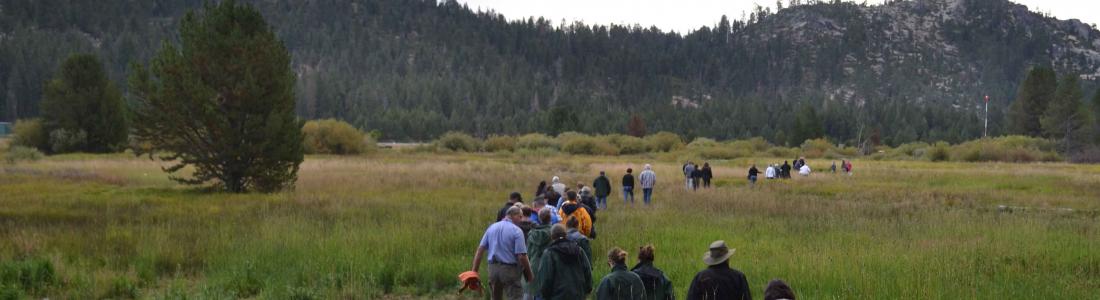
Beyond this tiniest of Eastern Sierra communities is a parcel of barren wilderness soon to be nourished by high-mountain snowmelt and teeming with colorful life. Conway Ranch used to raise cattle. Now it’s the domain of coyotes, watched over by eagles and completely ignored by motorists whizzing by on U.S. 395. But barring lengthy bureaucratic snags, it’ll soon house the region’s largest and most ambitious private trout hatchery.
The transformation has begun. Earthen raceways are dug. One is watered and brimming with fat rainbows, luring eagles to nearby power poles, perched like vultures. Brown and cutthroat trout also will be raised here and stocked in area waters.
Meantime, the Inland Aquaculture Group of investors irons out details with Mono County, which haggles with LADWP, DFG, USFWS, NRCS, SCE, BLM and other agencies with ties to the land, water and wildlife. The Inland Aquaculture Group is Tim Alpers, who sold his Owens River ranch and hatchery last December; John Frederickson, who owns concessions at June Lake and Crowley Lake; and Orange County businessman Steve Brown. They’ve leased 835 acres of property purchased recently by Mono County with $2 million in grant money.
Dan Lyster, director of economic development for Mono County, hopes the project will be a boon to the region. After all, visiting anglers — most of them from the Southern California — account for 60% of the Eastern Sierra economy, according to one study.
Read more form Pete Thomas’s “On the Outdoors” column in the Los Angeles Times by clicking here.
Reader’s respond to the SF Chronicle regarding EBMUD’s rationing program: “We gave already!”
Posted by: Aqua Blog Maven on May 15, 2008 at 1:40 pmFrom the San Francisco Chronicle:
East Bay residents are none too pleased at being told they have to dramatically cut their water use, at least judging by comments on SFGate. Although EBMUD said the pain will be applied fairly, not everyone appeared to believe that - especially those who say that as good citizens they have already cut their water use to the minimum, yet are now being punished for it. Some residents beyond the East Bay, however, said more can be done.
Below, edited for space, is a sample of comments posted on SFGate. To read more, go to sfgate.com/ZDIV
What about those of us who were already conserving water? I have been using only 35 gallons of water a day. That’s pretty darn good. And I am supposed to cut 10% off of that? Come on!
- Joseph Ehrlich, 51, Richmond
My yard is local flora (old trees and new weeds) and I don’t wash dishes or clothes until I have a full load. Showers are brief and only as needed (my friends don’t mind). Not much fat to trim off the bone here, but if I don’t conserve even more, the powers-that-be will find a way to make a buck off of me anyway, right?
- Jeffrey Finder, 53, El Sobrante
Read more reader comments from the San Francisco Chronicle by clicking here.
High-tech irrigation control study for avocado groves funded; growers are a little leery
Posted by: Aqua Blog Maven on May 15, 2008 at 1:37 pmFrom The Business Press:
The Rancho California Water District was awarded a $100,000 grant from the U.S. Bureau of Reclamation’s water conservation field services program for a demonstration study using a weather-based irrigation controller to improve irrigation efficiency at avocado groves, but local growers are skeptical.
The district partnered with the California Avocado Commission and Petaluma-based HydroPoint Data Systems Inc. HydroPoint invented the WeatherTRAK irrigation controller.
Growers are leery of the technology. “One of the biggest problems we’re going to have is putting all the hardware into the valves,” said Ben Drake, a local avocado grower. “It’s not like a small landscape; it’s a nightmare.”
The WeatherTRAK system has yet to be installed in an avocado grove. The grant was based on data provided by the water district and HydroPoint. The WeatherTRAK system allows for real-time, online irrigation control by way of a secure Web site. With smart controllers, irrigation needs - frequency of irrigation, start time and duration of water –are precisely scheduled, thus promoting irrigation efficiency.
Drake has experience with controllers but has not used the WeatherTRAK system on any of his crops. But if properly implemented, the system could yield water savings, he said. “I see a saving, probably not during the middle of the summer because we’re trying to put as much water on as we can in the hot months,” he said. “But in the early spring and in the fall when we start getting cooler temperatures.”
Read more from The Business Press by clicking here.
Engineers OK Riverside County-O.C. tunnel to transport millions of gallons of water
Posted by: Aqua Blog Maven on May 15, 2008 at 1:34 pmFrom the O.C. Register:
Results from test drillings in the Cleveland National Forest show that a tunnel could be built to transport millions of gallons of water between Riverside and Orange counties, according to a recent Metropolitan Water District report.
Last year, the district drilled two 2,000-plus-feet-deep holes to study whether a 12-mile tunnel could be constructed underneath the mountains. The findings, which were presented to a district panel this week, stated that though construction is viable, it may take longer and cost twice as much as expected to build the tunnel.
A 10- to 12-foot-diameter tunnel by today’s standards could run up to $680 million to $770 million. Construction could last between 80-90 months, or more than seven years.
Weak, squeezing ground at tunnel level, permitting requirements by the U.S. Forest Service and encroaching development could lead to longer mining time and increased construction costs, according to the report.
But don’t hold your breath on this. Tunnel won’t be built until 2040, officials say. Read the rest of this story from the O.C. Register by clicking here.
The triple threat: Our food, water and climate challenges
Posted by: Aqua Blog Maven on May 15, 2008 at 1:29 pmFrom AlterNet:
Food prices rose 4 percent in the United States last year, the highest rise since 1990. All over the world food prices are on the rise. At the spring meetings of the International Monetary Fund and the World Bank finance ministers wanted to focus the world’s attention on food crisis rather than the credit crisis.
There are many factors contributing to this current crisis, including the rising price of oil, deregulated agricultural markets, financial speculation, and biofuels. Another key factor is climate change, which is affecting crop yield and food production. It is time for us to get serious about understanding the way climate change affects water resources for food production and conversely the way agricultural water use is leading to climate change.
In January, scientists at the Scripps Institution of Oceanography in the U.S. published an article in the journal Science that said what many climate change experts had already been saying for some time: global warming is responsible for the extreme changes that we see in the hydrological cycle in the western U.S. Moreover, the scientists from Scripps found that up to 60 percent of the climate-related trends of river flow, winter air temperature and snow pack between 1950 and 1999 are human-induced.
While the Scripps scientists analyzed data for the western United States, similar changes have been happening around the world in the second half of the twentieth century. The Fourth Assessment Report of the Intergovernmental Panel on Climate Change (2007) found that “climate and freshwater systems are interconnected in complex ways and that any change in one of these systems induces a change in the other.”
Read the rest of this story from AlterNet by clicking here.
L.A. prepares massive water-conservation plan, to include water restrictions and a recycled water program
Posted by: Aqua Blog Maven on May 15, 2008 at 6:48 amFrom the Los Angeles Times:
With vital and often-distant water sources shrinking, Los Angeles officials today will revive a controversial proposal to recycle wastewater as part of a plan to curb usage and move the city toward greater water independence.
The aggressive, multiyear proposal could do much to catch the city up to other Southern California communities that have launched advanced recycling programs.
Mayor Antonio Villaraigosa’s effort could cost up to $2 billion and affect a wide range of daily activities. For example, residents would be urged to change their clothes’ washers, and new restrictions would be placed on how and when they could water lawns and clean cars.
Financial incentives and building code changes would be used to incorporate high-tech conservation equipment in homes and businesses. Builders would be pushed to install waterless urinals, weather-sensitive sprinkler systems and porous parking lot paving that allows rain to percolate into groundwater supplies.
Just to meet a 15% increase in demand by 2030, officials say 32 billion gallons a year will have to be saved or recaptured — enough to cover the San Fernando Valley with a foot of water.
Prohibitions during the 1990s drought — banning residents from washing driveways and sidewalks, letting sprinklers flood into gutters and watering grass in midday — would be enforced again, with additional restrictions. One part of the proposal would limit lawn watering to certain days of the week.
“This is a radical departure for the city of Los Angeles,” said Department of Water and Power General Manager David Nahai. “I think overall this plan is going to be a beacon for other cities.”
In fact, cities facing the same challenges, including Long Beach, have already moved to curtail residential and commercial water usage and punish waste. Orange County and other Southern California agencies are also recycling treated sewage water back into the drinking supply.
Los Angeles’ plan — a copy of which was made available to The Times — would invest in projects to capture and store rainfall and clean up a sprawling, contaminated water supply beneath the San Fernando Valley. About $1 billion would be allocated for reclamation, including a politically sensitive plan to use treated wastewater to recharge underground drinking supplies serving the Valley, Los Feliz and the Eastside.
Read the full text of this story from the Los Angeles Times by clicking here.
The Daily Breeze adds this:
The effort to drought-proof the city and its more than 4 million residents comes as regional leaders try to find ways to deal with dwindling supplies from Northern California, the Sierra and the Colorado River.
“L.A.’s future depends on our willingness to adopt an ethic of sustainability. If we don’t commit ourselves to conserving and recycling water, we will tap ourselves out,” Villaraigosa said. “This plan makes a basic promise to our kids. We are going to recycle and conserve enough water to meet 100percent of new demand.”
To encourage Angelenos to save, the plan recommends ticketing water wasters, offering more financial incentives for efficient appliances and synthetic turf, and installing “smart” sprinklers that turn off when it rains. But the groundwater reclamation is Villaraigosa’s boldest proposal.
Acknowledging the failed recycled water program that was killed by then-mayor James Hahn in 2001, David Nahai had this to say:
DWP General Manager H. David Nahai said recycled water is becoming more common. Orange County has a similar recycled water system, while residents in London, Israel and even downstream from Las Vegas all drink reclaimed water. “We’re going to do this in a completely different way,” Nahai said. “We can’t afford to fail at this. Our plans are very ambitious; we’re talking about a sixfold increase in recycled water.”
Read more coverage from the Daily Breeze by clicking here.
Some wine grape growers turning to dry farming methods
Posted by: Aqua Blog Maven on May 15, 2008 at 6:33 amFrom the Associated Press:
Vineyard manager Steve Thomas grasps the trunk of a zinfandel vine, a redwood of the vineyard, gnarled with age and planted in the days when irrigation meant a barrel of water on a horse-drawn cart. The work horses and carts are long gone. But these old zin vines at Kunde Estate in Sonoma County still get their water the old fashioned way, from rain, dew and a deep root system.
They call it “dry farming,” which is what agriculture used to be before plastic hoses hooked up to a water supply made deserts bloom. A few vintners are returning to it. They are driven by concerns over dwindling water supplies, the belief it produces more intensely flavored fruit, and, in Kunde’s case, by a desire to return to old traditions. “What you find out is grape vines are incredibly adaptable,” said Thomas.
At the 600-acre Kunde Estate, about 100 acres are dry-farmed. The rest are grown conventionally.
Wine grapes are grown without artificial irrigation in parts of the world such as Spain and France, where some regions have laws forbidding use of irrigation, said Robert Wample, chair of the viticulture and enology at California State University, Fresno.
Dry farming in California is unusual, although there is a trend toward using less water. “We’re learning to be much more precise early in the growing season so we can control the vegetative growth, minimize the total water consumption and then follow that with good management practices,” he said.
Read the rest of this article from the Associated Press by clicking here.
Southern California: top of list for power concerns; capacity margins will be tight & significant amounts of imported power needed
Posted by: Aqua Blog Maven on May 15, 2008 at 6:30 amFrom Reuters News Service:
Southern California’s electricity system will be challenged this summer, and power emergencies may result if an extended drought leads to massive wildfires, the main U.S. electricity reliability watchdog said on Wednesday.
Southern California is the area that most concerns analysts at the North American Electric Reliability Corp (NERC), which on Wednesday issued its summer 2008 outlook. Of Southern California, NERC said, “capacity margins will remain tight. Significant amounts of imported power are required to fortify capacity margins and preserve reliability, resulting in heavily loaded transmission lines into this area during peak conditions. As a result, unplanned major transmission or generation outages, or extreme temperatures/demand may lead to resource constraints.”
NERC, of Princeton, New Jersey, is responsible for monitoring the reliability of the power grid in the United States, Canada and parts of Mexico. NERC said voluntary conservation and on-call interruptible loads will likely be necessary more often than usual this summer.
As always, the biggest factor in how much demand will strain the power grids in California and the United States is the weather. NERC said nationwide, U.S. temperatures were 12 percent warmer than normal in 2007 and 10 percent warmer than normal in 2006.
Last October, wildfires in San Diego County threatened a major transmission line and caused it to go off-line as the San Diego area nearly averted a power crisis. More wildfires could exacerbate an already precarious situation in California this summer, NERC said.
“Drought conditions persisting in Southern California, Nevada, eastern New Mexico and western Texas currently appear to have no impact on reliability, though potential for wildfires as a result of dry conditions can threaten infrastructure and will be monitored throughout the summer months,” said the NERC study.
Read the full text of this article from Reuters News Service by clicking here.
New report paints bleak picture for California agriculture
Posted by: Aqua Blog Maven on May 15, 2008 at 6:23 amFrom the Western Farm Press:
One of the advantages of living a fairly long time is that one remembers what things used to be like way back when. Belonging to the leading edge of the post-World War II baby boom and growing up in Los Angeles in the 1950s is a perfect case in point.
My family bought a house in a new subdivision in Norwalk in the early 1950s as the steady encroachment of urbanization pushed out dairies, farm fields and tree orchards. In fact, the only exposure I had to agriculture before I took this job was the few short years that my cousins and I played in the pasture behind my house throwing cow pies at each other in smelly games of tag. The dairy owner eventually had to bend to the onslaught of civilization and move away — an exodus literally sparked by errant neighborhood teenagers setting his haystacks ablaze while smoking in his lofts.
For those of us who grew up in Southern California in the 1950s we watched the last remaining vestiges of production agriculture forced out of the region as valuable ag land was gobbled up by developers who replaced it with freeways, businesses and homes. As recently as 1960, L.A. led the nation in total farm production. Fact is, there are no orange orchards in Orange County anymore. Today you can drive 100 miles from L.A. to San Diego without seeing any vacant land except that surrounding Camp Pendleton — which brings me to the point of this column — the rapid elimination of California’s valuable farmland.
It just boggles the mind to contemplate the consequences of paving over our nation’s “breadbasket.” In the years ahead, I believe, the entire state will go the way of Los Angeles as California’s population continues to grow by as many as a half-million new residents each year and Central Valley farm fields continue to vanish at an alarming pace.
To back up my concerns I point to Paving Paradise: A New Perspective of California Farmland Conversion, a report released late last year by the American Farmland Trust, written by AFT California Director Edward Thompson, Jr. The report is bleak: About one-sixth of all land developed since the Gold Rush was lost between 1990 and 2004. That amounts to about a half million acres, nearly two-thirds of it agricultural land, Thompson notes.
Read the rest of this story from the Western Farm Press by clicking here.
Sewer to spigot: An article on recycled water from the Wall Street Journal
Posted by: Aqua Blog Maven on May 15, 2008 at 6:19 amFrom the Wall Street Journal:
A growing number of cities and counties grappling with water shortages are turning to a solution that may be tough for some homeowners to stomach: purifying wastewater so that residents can drink it.
In an effort to replenish its groundwater supply, Los Angeles is slated to announce Thursday a plan that will recycle 4.9 billion gallons of treated wastewater to drinking standards by 2019. In San Diego, the city council voted in favor of a pilot project that would pump recycled sewage water into a drinking-water reservoir, despite a veto from the mayor over the system’s cost. Miami-Dade County, Fla., is planning a system that would pump 23 million gallons a day of purified wastewater into the ground; the water will eventually travel to a supply well and be reclaimed for drinking use.
Water recycling is just one of a number of tactics parched cities — many of which have faced water shortages for years — are using. “Demand is growing, and supply is pretty much staying static,” says Wade Miller, executive director of the WateReuse Association, a nonprofit in Alexandria, Va., that promotes water recycling.
In Los Angeles, Mayor Villiaragosa is coming around to the realities of Southern California’s water situation:
Recurring droughts and growing populations are increasing the allure of recycling. In Los Angeles, groundwater contamination in the San Fernando Valley, where the majority of the city’s groundwater supply is produced, has limited water available for pumping. “If we don’t commit ourselves to conserving and recycling water, we will tap ourselves out,” says Los Angeles Mayor Antonio Villaraigosa in a statement.
In San Diego, plans to augment reservoirs with recycled water have been met with staunch resistance, but residents there already drink recycled water, whether they realize it or not:
Skeptics may feel squeamish about drinking what used to be toilet water, Mr. Peters says, but San Diego already receives at least some wastewater from other cities that discharge treated sewage water into the Colorado River. “The Colorado River is not filled with Dasani,” Mr. Peters says. “That’s where we get our water from.”
Read the rest of this story from the Wall Street Journal by clicking here.
Perfect Storm: House Panel Will Hold Hearing on West Coast Salmon May 15
Posted by: Aqua Blog Maven on May 14, 2008 at 4:59 pmFrom Dan Bacher:
A House Subcommittee will hold an oversight hearing on the management of West Coast salmon fisheries on Thursday, May 15 at 10 a.m. (eastern) in Washington, D.C. The hearing occurs at a time when salmon fishing off the coast of California and most of Oregon has been closed, due to the unprecedented collapse of Central Valley fall run chinook salmon.
The House Natural Resources Committee, Subcommittee on Fisheries, Wildlife and Oceans will hold the hearing at Room 1324 Longworth House Office Building. The hearing, entitled, “A Perfect Storm: How Faulty Science, River Mismanagement, and Ocean Conditions Are Impacting the West,” will be webcast live on the Committee’s Web site at: http://resourcescommittee.house.gov.
Witnesses at the hearing will include:
Mr. Roger Thomas, Golden Gate Fishermen’s Association, Sausalito, CA
Mr. Dick Pool, Pro-Troll Fishing Products and American Sportfishing Association, Concord, CA
Mr. Joel Kawahara, commercial salmon fisherman, Seattle WA
Ms. Laura Anderson, Local Ocean Seafoods, Newport, OR
Mr. Rod McInnis, Southwest Regional Administrator, NOAA Fisheries Service
Mr. Mike Rode, Former California Fish and Game
Dr. Jack Williams, Senior Scientist, Trout Unlimited
Mr. Jim Litchfield, Litchfield Consulting
Mr. Jason Peltier, representing San Luis Delta Mendota Water Authority
Winter 2008 - a meteorologist’s perspective
Posted by: Aqua Blog Maven on May 14, 2008 at 4:57 pmFrom the Sierra Sun, this retrospective on the winter weather this year:
Don’t look now, but another winter has come and gone. Although the 2008 water year does not officially end until Sept. 30 (the historic low-point for water flow and reservoir storage in the Sierra Nevada), for all intents and purposes the rainy season is over.
It was an interesting winter in that two separate storm periods over the course of five weeks produced the bulk of the season’s precipitation. The heavy and persistent snowfall during January and into early February made national news and most likely helped boost our winter economy by ramping up the motivation of winter sports enthusiasts to visit local resorts.
Besides ensuring great skiing and snowboarding conditions, the big snowstorms also allayed fears of another dry winter like we experienced in 2007, which turned out to be one of the driest on record according to the Central Sierra Snow Lab at Soda Springs near Donner Pass.
Get a meteorologist’s view of the past winter from the full text of this story by the Sierra Sun - click here.
EBMUD needs to rethink it’s rationing plan, says editorial: “Using average water use over the last three years would penalize those who were most diligent in conserving water”
Posted by: Aqua Blog Maven on May 14, 2008 at 4:51 pmFrom Inside the Bay Area, this editorial:
EBMUD officials have a goal of 15 percent reduction in water use for businesses and residents, with a conservation target of 19 percent for residents of single-family homes. These overall goals seem to be appropriate and should not be too great a hardship for most water users. However, EBMUD officials need to reconsider their proposed method of rationing.
The chief flaw is basing water rationing on average use over the past three years. Many EBMUD customers have been conserving their water use for many years, while others have not. Using average water use over the last three years would penalize those who were most diligent in conserving water. Residents who have not been careful about water use could cut back 19 percent and still use far more water than conservation-minded neighbors.
EBMUD’s plans to increase rates and use surcharges to enforce rationing make sense. But it would be more equitable to base water-use policy on the number of gallons used per person in a household. Those who already are frugal water consumers might no have to cut back much, or at all, while those who use excessive amounts of water might have to cut back more than 19 percent.
While EBMUD has suggested some easy and sensible ways to reduce water usage, the editorial notes:
… such restrictions already have been self-imposed by many of EBMUD’s customers. It would be unfair to force them to reduce water use by the same percentage as those who have not taken any action to conserve.
EBMUD has the ability to gather the necessary data to base conservation on a gallons-per-person basis for residential consumption. That is the fairest method to effectively ration water without imposing undue hardships on those who have been the most responsible in the past in using water.
Read the full text of this editorial from Inside the Bay Area by clicking here.
San Joaquin County Board of Supes passes another resolution against peripheral canal **added coverage**
Posted by: Aqua Blog Maven on May 14, 2008 at 6:47 amFrom Stockton’s Record:
The San Joaquin County Board of Supervisors has drawn another line in the sand to the idea of building a canal that would convey water around the Sacramento-San Joaquin Delta. The supervisors added a new resolution Tuesday to the growing list of formal stands they’ve taken against such a proposal.
But before they approved a comprehensive response to a state panel report on the future of the Delta, the supervisors threw down the gauntlet, challenging cities and other agencies in the San Joaquin County to pass similar resolutions. “We need to stand up and ask them to take a stand,” Supervisor Larry Ruhstaller said. “Get their support, or at least get them on record.”
The Delta Vision process has raised the possibility of a ‘dual-conveyance’ facility that would move water through and around the Delta. The San Joaquin County board has taken stands in the past against the peripheral canal, or any form thereof:
The supervisors’ resolution declares that a peripheral canal would impair water quality, harm the ecosystem and require loss of agricultural and, possibly, land for future urban development.
Water conveyance was not the only issue covered in the resolution. The four-page document weighs in on other points included in the November report from the task force. “They’re actually gone so far as to rename the Delta,” Lytle said. The Delta Vision report calls the estuary the “California Delta.”
But the canal drew the most ire from supervisors on Tuesday. “I don’t see any value to San Joaquin County in any peripheral canal,” Chairman Ken Vogel said. “Whatever you want to call it.”
Read the full text of the article from Stockton’s Record by clicking here.
The Lodi Sentinel takes a bit stronger attitude in it’s coverage:
Issuing a strong statement that San Joaquin County must protect itself against Delta water being exported to the south while acknowledging the water needs in Southern California, the Board of Supervisors adopted a resolution Tuesday opposing a second attempt of a Peripheral Canal. “Right now, we’re in a huge tug-of-war between north and south,” Mel Lytle, the county’s water resource coordinator, told the Board of Supervisors.
The proposal was put on the table by the Delta Vision Blue Ribbon Task Force, a group appointed by Gov. Arnold Schwarzenegger to advise on how to deal with California’s divergent water interests. It’s the second generation of the so-called Peripheral Canal, which was defeated by voters statewide in 1982. The proposal was to divert Delta waters to Southern California.
Lytle said that diverting water to urban areas in the Los Angeles and San Diego areas, along with farms in Kern and other south San Joaquin Valley counties, would be detrimental locally.
Read the full text of this article from the Lodi Sentinel by clicking here.
Farmers face low water year; reservoir levels drop as California braces for dry conditions
Posted by: Aqua Blog Maven on May 14, 2008 at 6:36 amAfter a great start to the snow season, the driest March & April on record reduced the snowpack to only 67% of normal. State Water Project contractors have been told to expect only a 35% allocation, and the Central Valley Project is only slightly better, with contractors alloted 45% of their normal water. From the Capital Ag Press:
For farmers in some areas of the state, actions already have been taken in order to deal with less water.
Sarah Woolf, spokesperson for the Fresno-based Westlands Water District, said last year’s conditions led to the fallowing of 200,000 of the 600,000 acres served by Westlands, the state’s largest irrigation district. “Our growers made a lot of decisions in the winter regarding how much acreage they could and could not plant based on the Wanger decision and the knowledge that our water supply was going to be short because of that decision.”
The Wanger decision is a federal court ruling handed down last year that will limit water exports from the Bay-Delta in order to protect endangered delta smelt populations.
Mike Wade, executive director of the California Farm Water Coalition, agreed that acreage is being scaled back around the state. “People started making these decisions last Sept. 1 after the Wanger decision,” he said. Water, he said, is being shifted from annual to permanent crops.
Looking at the snowpack and the reservoir levels leads Wade to believe the state may be in the second year of a drought - but no one wants to say the word, he added. The question is, what will conditions be in 2009 if the state’s water storage has been depleted, Wade said. He estimated conditions could look similar to those in 1990 or 1991. What’s shocking, said Wade, is it only took California two years to get into a critical situation.
Read the full text of this article from the Capital Ag Press by clicking here.
Farm Bill includes $170M in aid for salmon fisheries
Posted by: Aqua Blog Maven on May 14, 2008 at 6:24 amFrom the Portland Business Journal:
Legislators have added $170 million to the U.S. Farm Bill to aid families and businesses in California, Oregon and Washington affected by the biggest and most devastating Pacific salmon season closure in American history. The House and Senate are expected to pass the final version of the Farm Bill later this week.
“This funding is desperately needed by the communities and families who rely on salmon fishing, many of whom face losing their businesses and homes due to two years of no fishing,” said North Coast Congressman Mike Thompson, D-Calif., in a statement.
In April, a historic drop in juvenile Chinook salmon in the Sacramento River led to a complete closure of the commercial and recreational salmon seasons in California and Oregon. In Washington, the season was also closed because populations of the Columbia River Chinook and Coho salmon are at near-record lows.
In response, Commerce Secretary Carlos Gutierrez declared the salmon season a federal fisheries disaster, which authorizes Congress to provide aid to affected communities. Thompson and other members of the California, Oregon and Washington delegations asked Speaker Nancy Pelosi to help find disaster aid so communities could get aid as quickly as possible.
Read the full text of the story from the Portland Business Journal by clicking here.
IID board tackles how to deal with water rate hike protests, and internal governance issues
Posted by: Aqua Blog Maven on May 14, 2008 at 6:21 amFrom the Imperial Valley Press:
As the Imperial Irrigation District is undergoing a water rate and cost of service study, questions are being raised over who can protest if rates are raised.
For instance, an apartment building might have one water meter which serves all tenants. How many of them can protest a water hike and how would that be counted?
Abatti proposed a resolution that would give “one written protest per parcel” on any changes in the water fee.
The solution to the issue is just not that simple, Garber said. Proposition 218, that changed the way public notice and counting of protests was done more than 10 years ago, has been litigated in several court cases since then. Garber said the questions over how you notice property owners or tenants who can protest, and how it is all counted still linger for the district. What types of water charges, residential and irrigation use, the law applies to is also in question.
The board eventually voted to table the issue, with a promise from Garber to return with a full set of regulations that would address water rate-setting changes in the next 30 days.
Director James Hanks also pushed for clearer direction on how the board can proceed if it needs to raise rates in the future. “What we’re looking for is who gets the votes and a process the average person can understand,” Hanks said.
Also from the Imperial Valley Press:
Frustrated by projects over budget and a lack of accurate reporting by staff to the board, Imperial Irrigation District director Mike Abatti said things have to change. “We need ethical reporting, we need accurate reporting,” Abatti said.
The proposed change came before the IID Board of Directors in the way of a proposed change to the governance manual adopted nearly a year ago. Since then, the manual has been altered several times. The proposed amendment, brought forward by Abatti, would add a number of duties to the project management office that would oversee capital projects.
The PMO would also report to the general manager but also have a “functional reporting responsibility to the IID board.”
General Manager Brian Brady said though he agrees the amendment included some positive changes to the governance, he asked the board not to take action before he could integrate needed changes into his strategic planning. “The changes are overly broad,” Brady said.
Read the full text of this article from the Imperial Valley Press by clicking here.
Salt lakes around world in danger, especially the Dead Sea
Posted by: Aqua Blog Maven on May 14, 2008 at 6:12 amFrom the Salt Lake Tribune:
Around the world, salt lakes - bodies of water that harbor some of the most fascinating ecosystems in the world - are under assault from humans, particularly in the developing world.
Like the Great Salt Lake, the Middle East’s Dead Sea is fed by a river called Jordan. But unlike Utah’s much-abused inland sea, many fear the Dead Sea is in mortal danger of ecological collapse thanks to water diversions to thirsty populations and extractive industries in Jordan and Israel. The water level is expected to drop another 100 meters in the future, wrecking lakeside infrastructure as sinkholes form under roads and buildings and drying up the Dead Sea’s southern basin, said Israeli geologist Ittai Gavrieli Tuesday at a conference of the International Society on Salt Lake Research.
About 200 scientists from 20 nations are at the triennial event, held this year at the University of Utah’s Fort Douglas in conjunction with the Friends of the Great Salt Lake Issues Forum.
Salt lakes dot the arid American West, which boasts iconic names like California’s Mono Lake and Salton Sea and Nevada’s Pyramid Lake. In the last several years, Americans have shown a growing appreciation for these lakes, which provide crucial habitat for migratory birds, and a willingness to preserve them. But globally the prognosis is far from secure, said Bob Jellison, a society board member who gave Monday’s keynote address.
Read the full text of this article from the Salt Lake Tribune by clicking here.
Proposition 98 safeguards property rights and won’t interfere with water projects, says the California Farm Bureau Federation
Posted by: Aqua Blog Maven on May 14, 2008 at 6:08 amFrom the California Farm Bureau Federation:
Efforts to limit the use of eminent domain have intensified since a 2005 ruling by the U.S. Supreme Court that upheld the right of governments to take property from a private owner and give it to another private owner for commercial development. Uproar over the Kelo vs. City of New London decision prompted more than 40 states to reform their eminent domain laws. California is now seeking to join those states with the passage of Proposition 98, which will appear on the June ballot.
Also known as the California Property Owners and Farmland Protection Act, Prop. 98 is the latest attempt to pass reforms on eminent domain and restore private property protections for all California property owners, proponents of the measure say. They also say that the initiative would protect a property owner’s water rights and other natural resources from being taken through eminent domain.
Opponents, however, claim that the natural-resources clause will block future water development projects such as dams and reservoirs in California.
The California Farm Bureau Federation, which is a co-sponsor of Prop. 98 and strongly supports public water storage projects, asked one of the state’s prominent water attorneys, Stuart Somach, to give his legal opinion on that particular provision. His analysis concludes that Prop. 98 would not preclude the use of eminent domain to acquire property necessary for the construction of water storage or conveyance projects.
Specifically, Prop. 98 prohibits the “transfer of ownership, occupancy or use of private property or associated property rights to a public agency for the consumption of natural resources.” In his legal opinion, Somach wrote, “The relevant question is whether acquiring private property for the purpose of constructing a water storage or conveyance facility is ‘for the consumption of natural resources.’ We believe it is not.”
Aqua Blog Maven interjection: water storage or conveyance facilities are NOT ‘consumption of natural resources??? Click more to read more legal analysis…. Read more
East Bay Municipal Utilities District imposes first water rationing in 16 years; fairness of across-the-board cuts questionned
Posted by: Aqua Blog Maven on May 14, 2008 at 5:58 amFrom the San Francisco Examiner:
About 1.3 million water customers east of San Francisco Bay must cut back on their water use under rules imposed Tuesday amid the most severe water shortage in nearly 20 years. The East Bay Municipal Utility District’s board of directors voted unanimously to declare a water shortage emergency in Alameda and Contra Costa counties.
A drought management program approved by the board aims to curtail water use by 15 percent compared to average annual demand in the district. The plan forbids activities like washing a car while letting the hose run, washing sidewalks and patios instead of sweeping, running water fountains that don’t recycle water and watering lawns more than three times a week.
“Our goal is to impact people’s lives as little as possible and get the maximum amount of conservation that we can,” said Andrea Pook, spokeswoman for EBMUD. “So really, we’re going after water waste.”
Customers caught going against these prohibitions will be cited, though the cost of the fine is still uncertain, Pook said.
For the full text of this article from the San Francisco Examiner, click here.
There is a problem with across-the-board cuts, however, as noted in this Bloomberg News article:
Some residents complained during yesterday’s public hearing that the reduction would be unfair to those who already conserve.
“A mandatory 19 percent across-the-board reduction for all residential customers will screw those of us who have consistently conserved over the years,” said Berkeley resident Roger Sharpe, who spoke at the meeting. He estimated his household uses 60 to 70 gallons of water a day. “Users who have made no effort to conserve can easily reduce usage by 19 percent,” he said. “Those of us who have made a large effort to conserve will have a difficult time reducing usage even further.”
Sandra Turnbull, who lives in Oakland, also complained. Her family of four uses 120 gallons of water a day and has installed low-flow toilets, purchased energy- and water-efficient appliances such as a washing machine that cost $500 more than other models, and use native, drought tolerant plants for landscaping, she said. “I even take fewer showers every week to accommodate for the fact that we have two active teenagers,” she said at the hearing. An across-the-board reduction would mean that “water hogs get rewarded,” she said.
Read the full text of this article from Bloomberg News by clicking here.